PHG WATCH CO.

DESIGN PHILOSOPHY

FUNCTION FIRST.

FUNCTION DEFINES FORM.
FORM BECOMES STYLE.

PHG draws inspiration from classic military and tool watches of the 20th century. These watches were not originally created as decorative objects. Clear numerals, precise scales, compact proportions, high-contrast dials, and instantly readable layouts were shaped by real requirements.

Over time, these functional decisions became a distinctive visual language.

PHG studies why this language works – and brings it back to the wrist today.

PRINCIPLE 01

MILITARY DESIGN
IS ABOUT CLARITY.

Military watches were created around clear and demanding requirements. Time had to be read quickly. Numbers needed to be legible. Scales needed to be ordered. Hands needed to be unmistakable. Nothing unnecessary could interfere with readability.

This created a visual language we still recognize today: Arabic numerals, railroad minute tracks, strong contrast, central seconds, luminous markers and compact proportions.

These principles form the foundation of PHG design.

PRINCIPLE 02

TYPE IS PART
OF THE WATCH.

On a classic military dial, numerals are more than information. Their width, proportion, stroke, spacing and structure can change the entire character of a watch. The same “12” can create completely different impressions depending on its typography.

That is why PHG pays close attention to: numeral proportions, type structure, spacing, scale weight and overall dial hierarchy.

We study historic typography and reinterpret it within contemporary proportions.

PRINCIPLE 03

36MM IS
A PROPORTION.

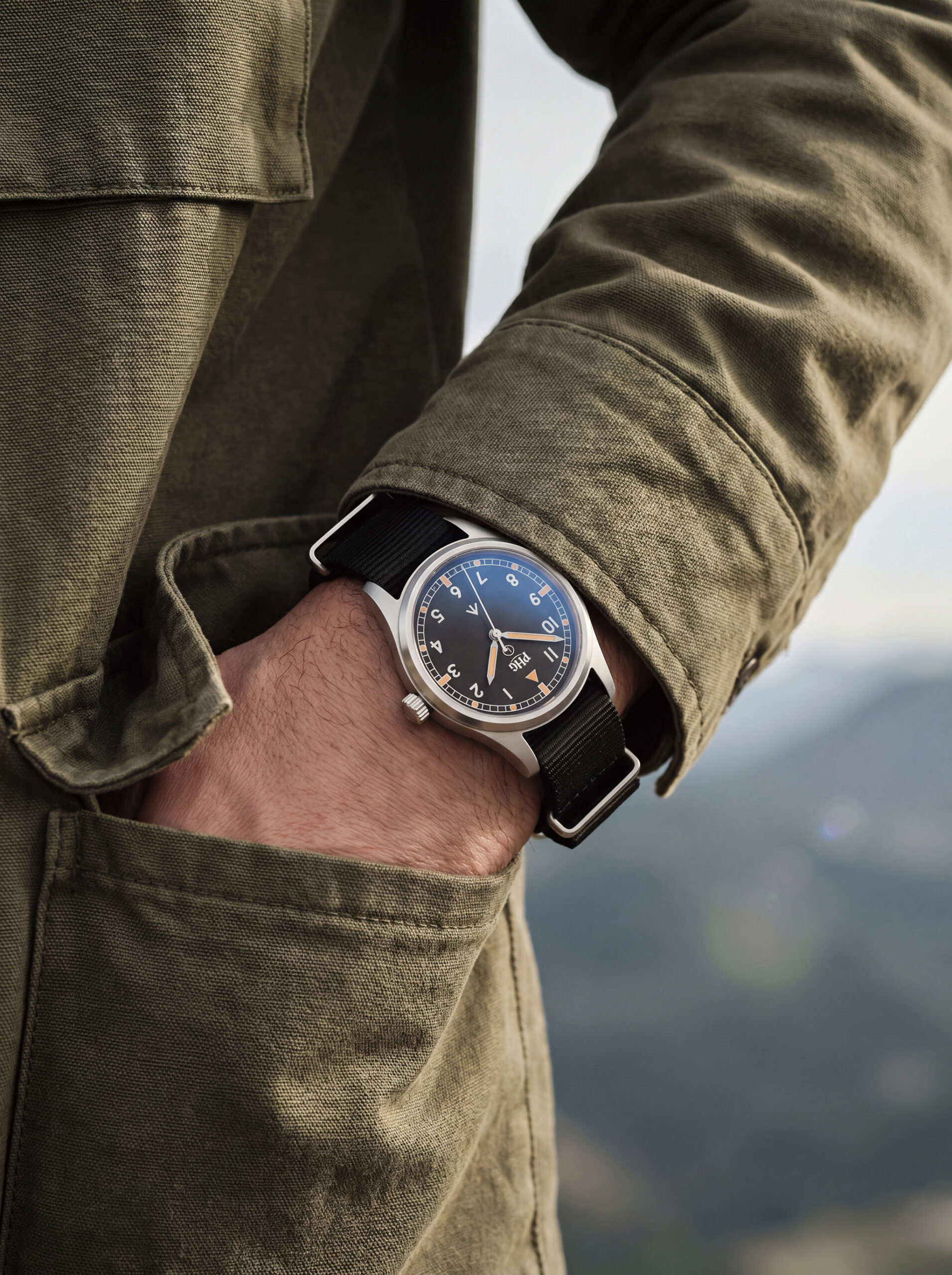
Many classic military watches were never designed to be oversized. Compact cases, controlled visual proportions and clear dials created watches that felt direct, balanced and highly legible.

Revisited today, 36mm is not simply “small.” It is a proportion refined by time.

Restrained, but never slight. Compact, but never cramped. Classic, yet still contemporary.

A 36mm PHG field watch on the wrist
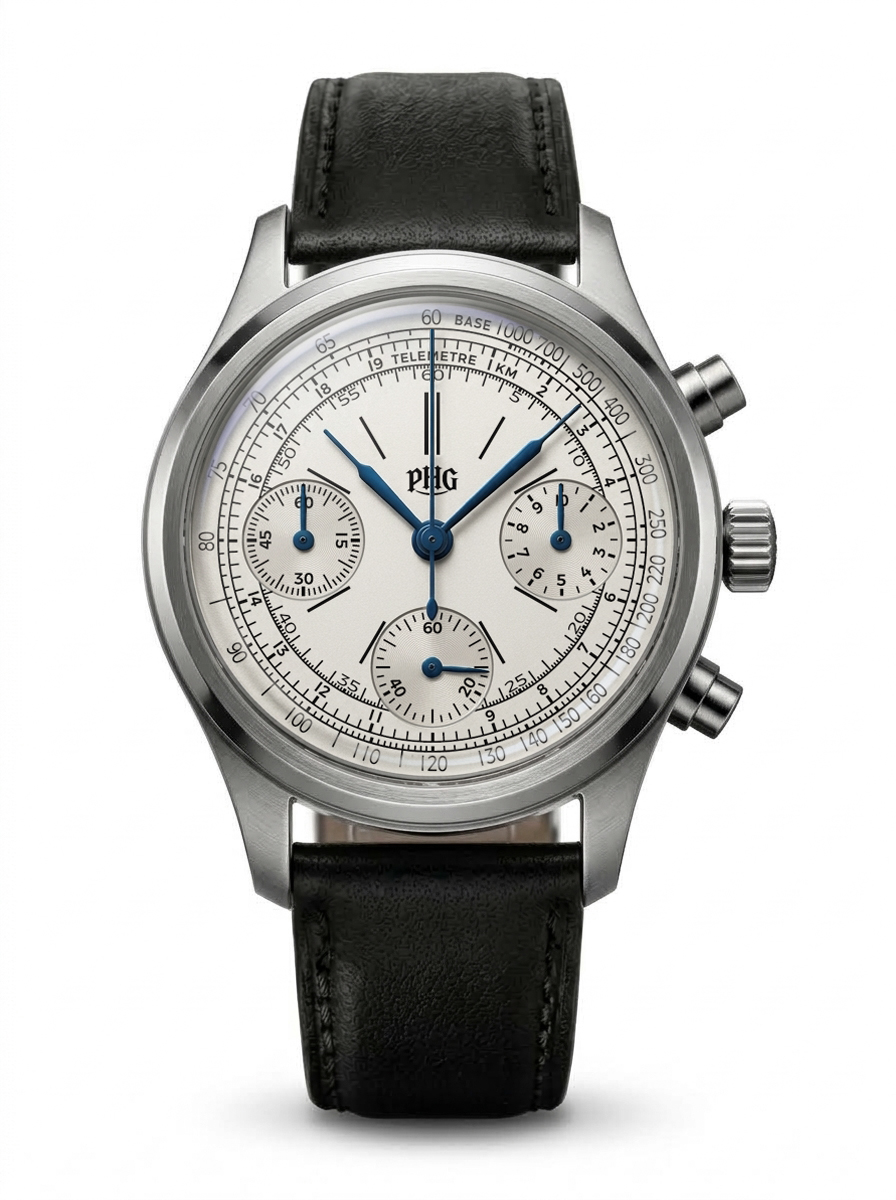
The layered composition of a PHG instrument dial

PRINCIPLE 04

THE DIAL IS
AN ARCHITECTURE.

A dial is not simply a flat surface. It is a system of relationships between numerals, scales, minute tracks, logos, hands and negative space.

A strong dial does not necessarily need more elements. It needs the right proportions, the right positions and the right amount of space.

PHG designs each layer to maintain a balance between function and visual character.

PRINCIPLE 05

HERITAGE ON THE DIAL.
MODERN ENGINEERING INSIDE.

Classic design does not mean staying in the past. PHG preserves the visual language of vintage watches while using modern materials and manufacturing techniques.

316L stainless steel, modern movements, domed sapphire or K1 crystal, contemporary finishing and controlled production standards bring these designs into the present.

Our goal is not to make a watch simply look old. It is to give classic design the reliability and wearability of today.

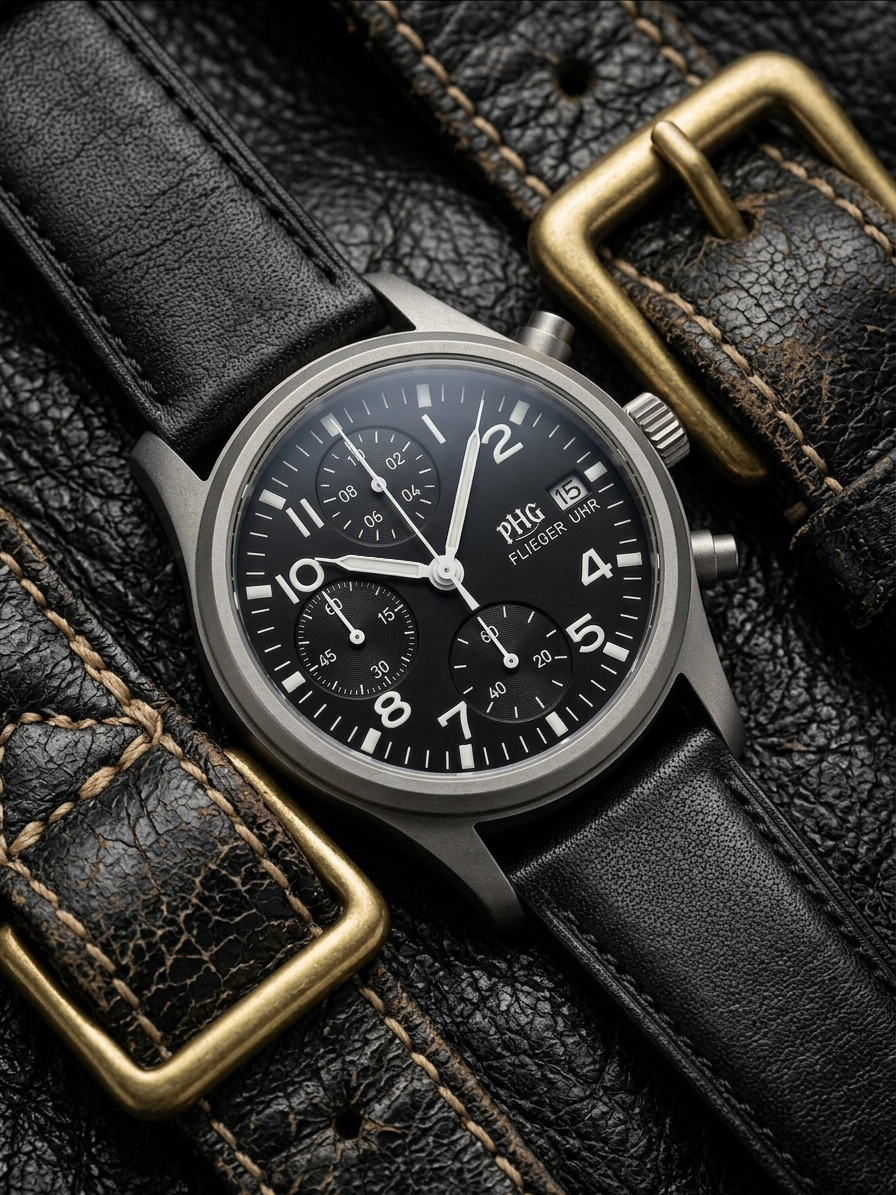
Steel case, domed crystal and dial printing in macro detail

PRINCIPLE 06

NOT MORE. JUST RIGHT.

PHG does not aim to fill a dial with as many elements as possible. We focus on what should remain – and what should be left out.

Every numeral, scale, hand and curve should have a reason to exist.

RESTRAINT IS PART OF DESIGN.

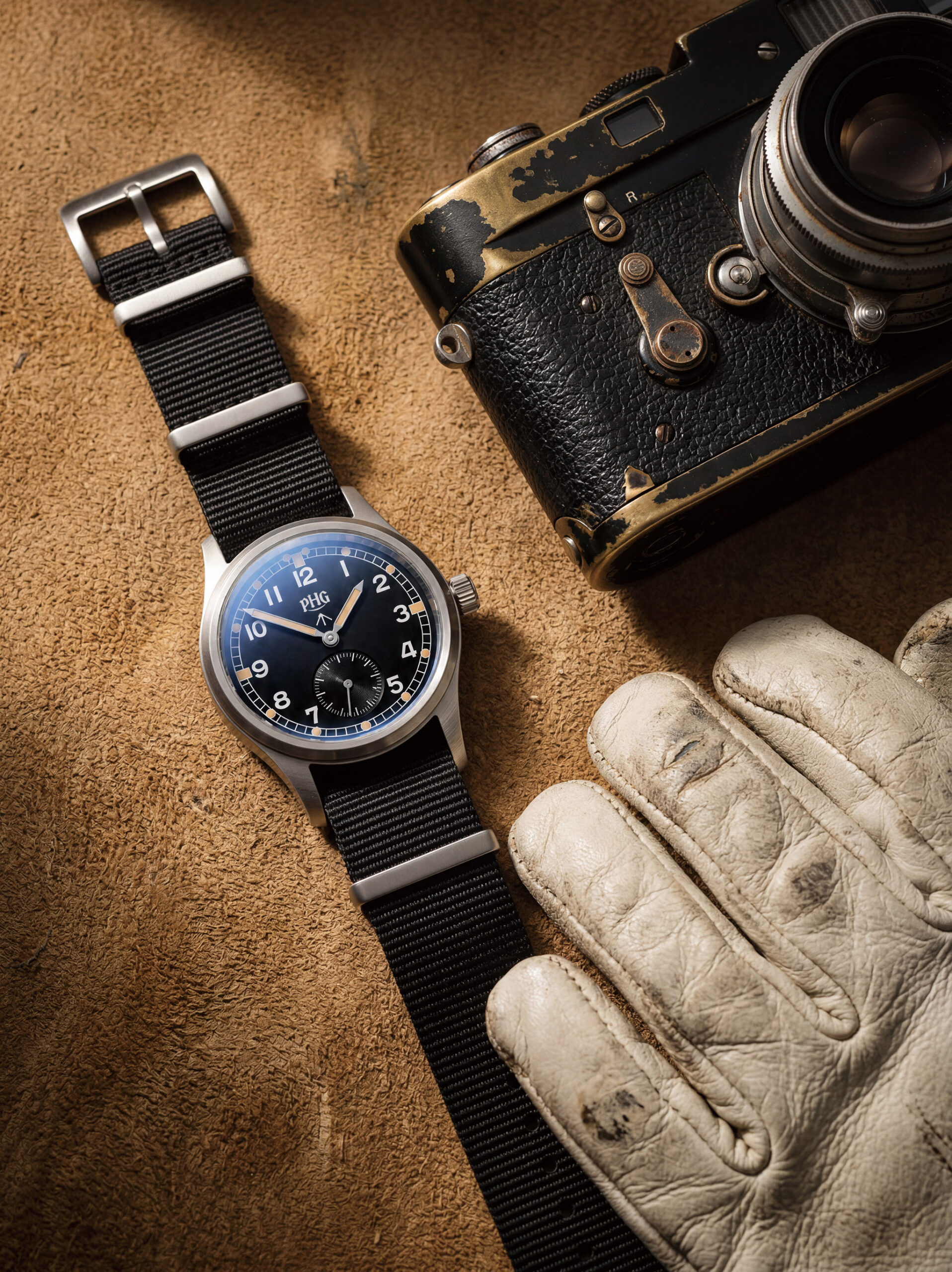
A vintage watch and its era - the reference behind PHG

PRINCIPLE 07

REINTERPRETING,
NOT REPRODUCING.

PHG respects historical design without trying to freeze it in time. We study why certain military watches became timeless, identify the principles that still matter, and reinterpret them through today’s proportions, materials, manufacturing and wearing habits.

PHG is not a reproduction of the past.

It is a continuation of classic design in the present.

PHG DESIGN PRINCIPLES

Six principles. One design language.

01

FUNCTION FIRST

02

CLARITY

03

PROPORTION

04

TYPOGRAPHY

05

RESTRAINT

06

MODERN HERITAGE

CLASSIC DESIGN,
REINTERPRETED FOR TODAY.

RESPECT THE PAST. BUILD FOR TODAY.

DESIGN SHOULD ULTIMATELY LIVE ON THE WRIST.

Explore the six PHG collections and discover how these design principles take different forms across military, naval, aviation, field, officer and motorsport-inspired watches.